Functional endoscopic sinus surgery (FESS): minimally invasive sinus surgery
The cost is calculated individually after a consultation and diagnostics
Service description
Functional endoscopic sinus surgery (FESS) at MediLavia is a minimally invasive, safe and high-tech ENT operation that we perform to modern international standards, including as a day-hospital procedure. The main indications for FESS are chronic inflammatory and polypous diseases of the paranasal sinuses that do not respond to medication.
MediLavia's advantages: quality and safety
FESS is performed only on modern endoscopic equipment with high-quality imaging, which improves precision and reduces the risk of complications. The operation follows a functional principle: the surgeon carefully restores the natural ventilation and drainage pathways of the sinuses, preserves the healthy structures of the nose as much as possible and reduces the risk of recurrence. Every stage, from preparation to discharge, is standardized and regulated.
Day hospital
At MediLavia, FESS can be performed as a day-hospital procedure: the patient comes in for the operation, undergoes the procedure and, after observation, goes home the same day. This format reflects the global trend toward minimally invasive ENT surgery: it shortens the hospital stay, reduces stress and allows a faster return to usual activity, while all monitoring and safety requirements are maintained.
Recovery and medication safety: the role of the internist
After the operation, the patient is followed by the clinic's internist, who takes full charge of medication and medication safety. The internist chooses painkillers, anti-inflammatory and other drugs taking into account other conditions, drug interactions and individual risks. If needed, additional lab tests are arranged (coagulation panel, complete blood count and biochemistry).
Follow-up with the ENT doctor
The ENT surgeon holds in-person check-ups after the operation, monitors healing of the mucosa and the condition of the sinus openings and, if needed, performs gentle endoscopic cleaning. The patient receives a clear schedule of check-ups and recommendations: routine, nasal rinsing, limits on physical activity, and when to return to work and sports. This separate but coordinated pathway (the internist handles medication safety and general recovery, the ENT doctor handles local control of the operated area) reduces risks and makes the patient more comfortable.
Rehabilitation
Irrigation and topical medication
- Recovery takes 9–10 days on average before returning to usual activity, with peak pain in the first 3 days
- High-volume saline nasal irrigation is an essential part of recovery and long-term control
- Topical nasal corticosteroids (spray) reduce mucosal swelling and the risk of recurrence; they are usually started 1–2 weeks after surgery, for as long as the doctor prescribes
- Antibiotics are not routinely recommended; they are prescribed when indicated (purulent discharge, signs of infection, certain conditions)
Debridement and nasal care
- The first debridement (cleaning of the nasal cavity) is usually 5–10 days after surgery, under endoscopic control
- How often debridement is needed depends on the extent of surgery and the degree of inflammation
- The modern approach is to avoid nasal packing or to use bioabsorbable materials
- Do not blow your nose hard, only dab it; sneeze with your mouth open
Activity
- Return to normal activity after 9–10 days on average; most patients return to work within a week
- Avoid lifting heavy objects, straining and bending your head down for the first 1–2 weeks
- No intense physical activity, sports or swimming for the first 1–2 weeks
- Avoid flying for the first 7–10 days
Who it’s for
Chronic rhinosinusitis
Chronic rhinosinusitis lasting 12 weeks or more that does not respond to adequate medication.
Recurrent purulent sinusitis
Recurrent acute purulent sinusitis (maxillary, ethmoid, sphenoid or frontal), polysinusitis, pansinusitis, especially with frequent flare-ups and persistently impaired drainage.
Polypous rhinosinusitis
Single polyps and widespread polyposis of the nose and paranasal sinuses blocking nasal breathing and ventilation.
Cysts, mucocele, fungal disease
Cysts and mucocele of the paranasal sinuses, fungal disease (mycetomas), chronic odontogenic sinusitis and foreign bodies in the maxillary sinuses.
When surgery is justified
When surgery is justified
For any of the indications, the criteria for FESS and a lasting result are:
- Objective confirmation of chronic rhinosinusitis on CT (Lund-Mackay score) and nasopharyngeal endoscopy
- Adequate prior medication: topical corticosteroids for 8 weeks or more, systemic corticosteroids for 1–3 weeks if needed, saline rinses, antibiotics
- Persistent symptoms: a SNOT-22 score of 20 or more after treatment
- The patient understands that the disease is chronic and that medication must continue after surgery: FESS gives topical drugs access to the sinuses and makes them more effective
Contraindications
Contraindications
- Other conditions that are contraindications to general anesthesia (severe decompensated heart or lung disease, marked respiratory failure and others), when the risk of general anesthesia is unacceptable
- Active acute infections and flare-ups of chronic diseases, until the condition stabilizes
- Blood clotting disorders (uncorrected coagulopathies, severe thrombocytopenia and others)
- Pregnancy: planned FESS is usually postponed; exceptions are possible for life-threatening complications by individual decision of a multidisciplinary team
The final decision on surgery is made after the diagnosis is confirmed with nasal endoscopy and CT of the paranasal sinuses. Chronic rhinosinusitis is a chronic disease; the operation is part of a comprehensive treatment plan, not a “cure”.
Protocol “One Visit — Full Treatment Strategy”
This section is under construction
We are preparing the materials — content will appear here soon.









Useful materials
 ENT12 min
When does chronic sinusitis need surgery?
Criteria for referral to FESS in chronic rhinosinusitis, evidence on the effectiveness of surgery and the role of biologic therapy — based on AAO-HNS guidance.
Read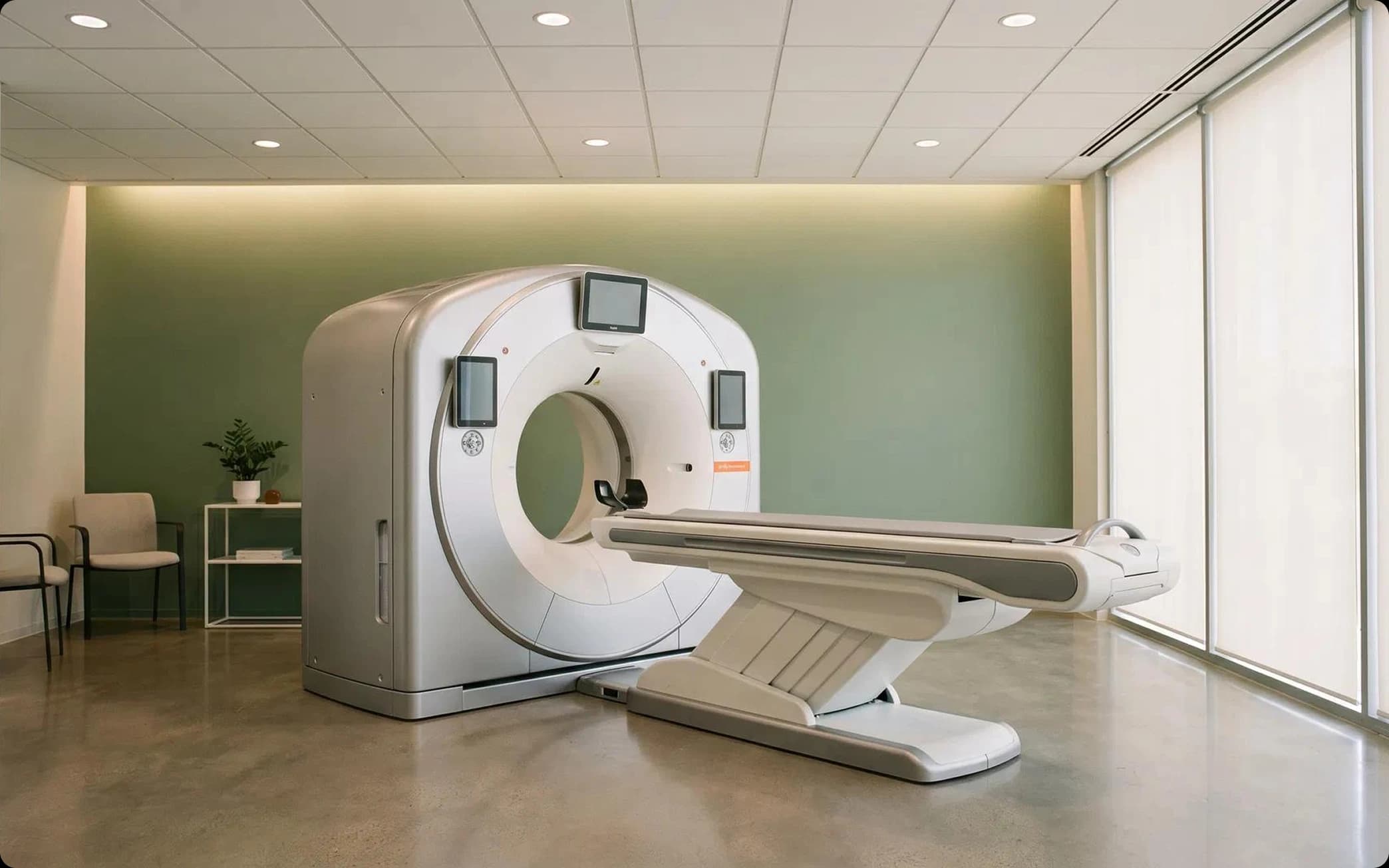 ENT13 min
Endoscopy and sinus CT: how patients are prepared for FESS
Nasal endoscopy, sinus CT and the CLOSE mnemonic, medical preparation and anesthesia planning before FESS.
Read ENT13 min
What is debridement and how should recovery after FESS be managed?
Debridement, nasal irrigation, topical corticosteroids, antibiotics and long-term follow-up after FESS sinus surgery — based on AAO-HNS guidance.
Read- ENT12 min
How is nasopharyngeal endoscopy performed in adults and children?
Choice of endoscope, preparation and anesthesia, technique in adults and children, indications for nasopharyngeal endoscopy, a low-risk outpatient procedure.
Read - ENT11 min
When is nasopharyngeal endoscopy contraindicated or in need of special preparation?
The safety profile of nasopharyngeal endoscopy, situations that call for special caution or postponement, and precautions when using topical medications.
Read
Related services
3D CT of the teeth and maxillofacial region
CBCT as the basis of a digital treatment plan: implants, orthodontics, maxillofacial surgery and ENT · from 5 000 ₽
Learn moreTotal intravenous anesthesia (general anesthesia, propofol)
General anesthesia with intravenous drugs: the anesthesiologist controls the depth of sleep at every stage, with breathing and circulation under continuous monitoring
Learn more
Get the «Unified Quality and Safety Protocol» — how the clinic protects the patient along the whole route
The document explains how MediLavia's safety system works: the questionnaire and doctor's preparation before the visit, mandatory risk screening by the general practitioner, a single case coordinator, multidisciplinary treatment-plan approval, pre-procedure checklists and a reinforced standard in paediatric practice.
Frequently asked questions
Endoscopic sinus surgery is recommended when the expected benefit of surgery outweighs the benefit of continuing conservative treatment alone. For chronic rhinosinusitis with polyps, surgery is offered after a course of intranasal corticosteroids (≥8 weeks) and systemic corticosteroids (1–3 weeks) if symptoms persist (SNOT-22 ≥ 20). With fungal rhinosinusitis, bone erosion, severe polyposis and complications, surgery is justified earlier.
Preparation includes two key diagnostic components: nasal endoscopy and CT of the paranasal sinuses (the gold standard for planning, a thin-slice protocol of ≤1 mm). In addition, there is medication preparation (systemic corticosteroids for polyposis to reduce blood loss), management of antithrombotic therapy and anesthesia planning.
No. FESS is performed through the nostrils, without external incisions and with minimal tissue trauma. The surgeon works under endoscopic control and restores the natural drainage pathways of the sinuses.
Yes. Post-operative care is essential: high-volume saline nasal rinses, topical corticosteroids (a spray or budesonide irrigation), debridement (removal of crusts) and long-term follow-up with a check-up between 3 and 12 months. Regular follow-up significantly reduces the risk of recurrence.
Book today
We'll get in touch within 15 minutes during business hours
Not ready to book?
Leave your phone — we will send the program and a price estimate and call back if needed.
Contacts
Clinic location
Address
10 Parshina St., premises 23N, entrance 9, Moscow
Opening hours
Mon–Sat 08:00–20:00
Map
MediLavia — 10 Parshina St., premises 23N, entrance 9, Moscow
Didn't find the service you need?
Call us or book a consultation — we will find the best solution
The text contains no guarantees of outcome. Final indications, contraindications and the treatment plan are determined by the doctor after an in-person consultation and diagnostics.