
Blog
Useful materials
Expert articles from the doctors of the MediLavia clinic
 Dentistry7 min
Your implant is in place. How to keep the result for years
An implant cannot get tooth decay, but the tissues around it can become inflamed. How professional hygiene and home care help you keep the result of treatment.
Read Dentistry9 min
Keep your own teeth: how professional hygiene lowers the chance of needing implants
Professional hygiene helps control tooth decay and gum disease — two common causes of tooth loss. How the procedure works and what to do at home.
Read Pediatrics12 min
Is sedation safe for children?
A systematic approach to the safety of pediatric sedation: pre-procedure assessment, monitoring, staff, choice of drug and readiness for emergencies.
Read Pediatrics7 min
Who is responsible for your child during general anesthesia or sedation at MediLavia?
The safety of pediatric sedation and anesthesia is built into the clinic as a system: patient selection, protocols, a skilled team and reliable infrastructure.
Read Pediatrics9 min
What are the effects of sedation and anesthesia in children?
The key finding of current data: a single short sedation or anesthetic does not cause significant neurocognitive impairment. We look at risk modifiers and recommendations.
Read- Pediatrics8 min
What side effects can nitrous oxide have?
The most common side effect of nitrous oxide in children is vomiting. Serious adverse events are extremely rare. We review data from large registries.
Read - Pediatrics10 min
What types of sedation are used in pediatric dentistry?
What sedation is, why it is needed and what levels exist: from nitrous oxide to intravenous sedation and general anesthesia. A clear explanation for parents.
Read - Pediatrics9 min
Pain relief for ENT procedures in children at the otolaryngologist’s office
How to reduce a child’s pain and fear during ENT procedures: non-drug methods, local anesthesia and light sedation with independent breathing preserved.
Read - Pediatrics9 min
Pain relief methods in pediatric ENT surgery
Why ENT surgery in children needs a special approach: the role of general anesthesia, combined endotracheal anesthesia, premedication and prevention of postoperative pain and nausea.
Read  ENT11 min
Indications and contraindications for ear tube placement (tympanostomy)
When placing a ventilation tube is justified and when ear tubes are not recommended: AAO-HNS criteria, risk groups, complications and effectiveness.
Read ENT13 min
Modern treatment of otitis media in children
Watchful waiting or antibiotics, choice of drug and course length, pain relief, managing otitis media with effusion and prevention — based on NEJM and AAP data.
Read- ENT12 min
Can frequent ear infections delay a child’s speech development?
How conductive hearing loss in otitis media with effusion affects speech and language, who is at risk and what ear tubes achieve — based on AAO-HNS guidance.
Read  ENT11 min
Side effects of antibiotics for frequent ear infections in children
Diarrhea, antibiotic resistance, gut dysbiosis, the risk of allergies and asthma: why a balanced approach to antibiotics matters in recurrent ear infections.
Read- Pediatrics12 min
Adenoids in children: when and how to treat, and when to watch
The natural course of enlarged adenoids, indications for conservative treatment and adenoidectomy, and a practical algorithm based on AAO-HNS guidance.
Read - Pediatrics11 min
Indications for surgery (adenoidectomy, tonsillectomy)
Obstructive, infectious and otological indications for surgery in children, the role of polysomnography and contraindications — per AAP and AAO-HNS.
Read - Pediatrics10 min
Why and how often do adenoids grow back after surgery?
Recurrence rate, timing, risk factors and the role of surgical technique: why complete removal of the tissue determines the outcome.
Read - Pediatrics11 min
Ways to prevent adenoid regrowth after surgery
Surgical and medical approaches and treatment of comorbidities: how complete tissue removal and endoscopic control reduce the risk of recurrence.
Read - Pediatrics13 min
Managing residual sleep apnea after adenotonsillectomy: CPAP and repeat surgery
A multidisciplinary approach to persistent OSA after surgery: medication, CPAP, orthodontics (RME), hypoglossal nerve stimulation and repeat surgery.
Read - Pediatrics10 min
What is drug-induced sleep endoscopy (DISE) and when is it needed?
How DISE differs from polysomnography, which sites of obstruction it reveals, when sleep endoscopy is indicated in children and how the methods compare.
Read - ENT12 min
When does chronic sinusitis need surgery?
Criteria for referral to FESS in chronic rhinosinusitis, evidence on the effectiveness of surgery and the role of biologic therapy — based on AAO-HNS guidance.
Read - ENT13 min
Endoscopy and sinus CT: how patients are prepared for FESS
Nasal endoscopy, sinus CT and the CLOSE mnemonic, medical preparation and anesthesia planning before FESS.
Read - ENT13 min
What is debridement and how should recovery after FESS be managed?
Debridement, nasal irrigation, topical corticosteroids, antibiotics and long-term follow-up after FESS sinus surgery — based on AAO-HNS guidance.
Read - ENT12 min
How is nasopharyngeal endoscopy performed in adults and children?
Choice of endoscope, preparation and anesthesia, technique in adults and children, indications for nasopharyngeal endoscopy, a low-risk outpatient procedure.
Read - ENT11 min
When is nasopharyngeal endoscopy contraindicated or in need of special preparation?
The safety profile of nasopharyngeal endoscopy, situations that call for special caution or postponement, and precautions when using topical medications.
Read - Pediatrics9 min
What anesthesia is used for adenoid and tonsil removal and ear tube placement?
Why endotracheal anesthesia is the gold standard for ENT surgery in children, the role of local anesthesia, premedication and prevention of postoperative pain and nausea.
Read - Dentistry12 min
Pain management in adults: how MediLavia keeps treatment pain-free
A personal “Pain Code”, a multimodal approach and evidence-based anesthesiology in dentistry, maxillofacial surgery and ENT: NSAIDs as first line, dexamethasone, regional blocks.
Read - Pediatrics8 min
Treatment without pain or fear: a pain management program for children
How MediLavia assesses and relieves pain in children: age-appropriate pain scales, safe medicines and an opioid-free approach, regional anesthesia and non-drug distraction methods.
Read - Pediatrics7 min
Pain management concept: the “Pain Team”
The full cycle of pain management, from pre-operative preparation to rehabilitation: who is on MediLavia’s perioperative medicine team and what each specialist is responsible for.
Read 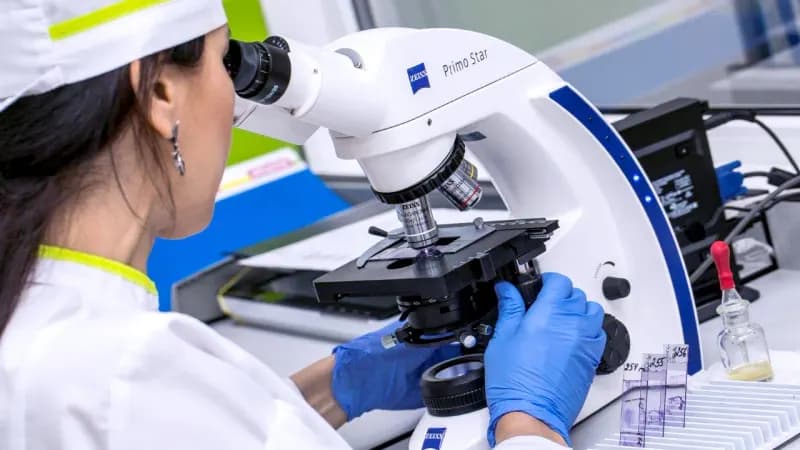 General medicine12 min
MediLavia Center for General Medicine, Laboratory and Instrumental Diagnostics
Why a mass “test everything for everyone” check-up does not work, how genetics is changing preventive medicine and what expert-class equipment the center uses: CBCT with Diagnocat AI, GE LOGIQ P9 ultrasound, the LabQuest laboratory.
Read- General medicine6 min
A check-up at MediLavia: an investment in the future based on your DNA
Why a standard “one size fits all” health check no longer works and how a personalized health pathway is built: from your genetic profile and targeted diagnostics to an individual risk management plan.
Read - General medicine6 min
A GP is more than an internist: your personal medical director
How MediLavia has rethought the role of the general practitioner: risk management, a single decision-making center, global referral to the world’s best resources and medicine for the whole family — the four pillars of your health.
Read - General medicine7 min
MediLavia’s unified quality and safety protocol
How patient safety is organized along the entire pathway — from the questionnaire before the visit and mandatory GP risk screening to operating room checklists, the photo protocol and a reinforced standard in pediatric care. 15 principles that protect you.
Read
Subscribe to our social media
Useful materials and clinical case reviews from the clinic's doctors — every week.